Home Is Something You Can Carry With You
We often imagine Home as a place we return to.
It is the familiar house at the end of the road, the room where we know where everything belongs, the people with whom we can lower our guard, or the place where the demands of the outside world become quieter. Home carries a sense of safety, belonging, restoration, and recognition.
There is something deeply human about wanting to return there.
But life does not always allow you to return to the original place when you need it.
Sometimes you are still in the middle of the Journey.
The problem has not been solved. The relationship has not been repaired. The decision has not been made. The uncertainty remains, and the terrain ahead may still be difficult.
What do you do when you need Home before you can get Home?
I think this is where another possibility becomes important.
Home can become something you learn to carry with you.
Not as an escape from the terrain, but as a protected center you can establish within it—a place where you can pause, reduce unnecessary input, take inventory, restore what has been depleted, remember what matters, and regain enough orientation to continue.
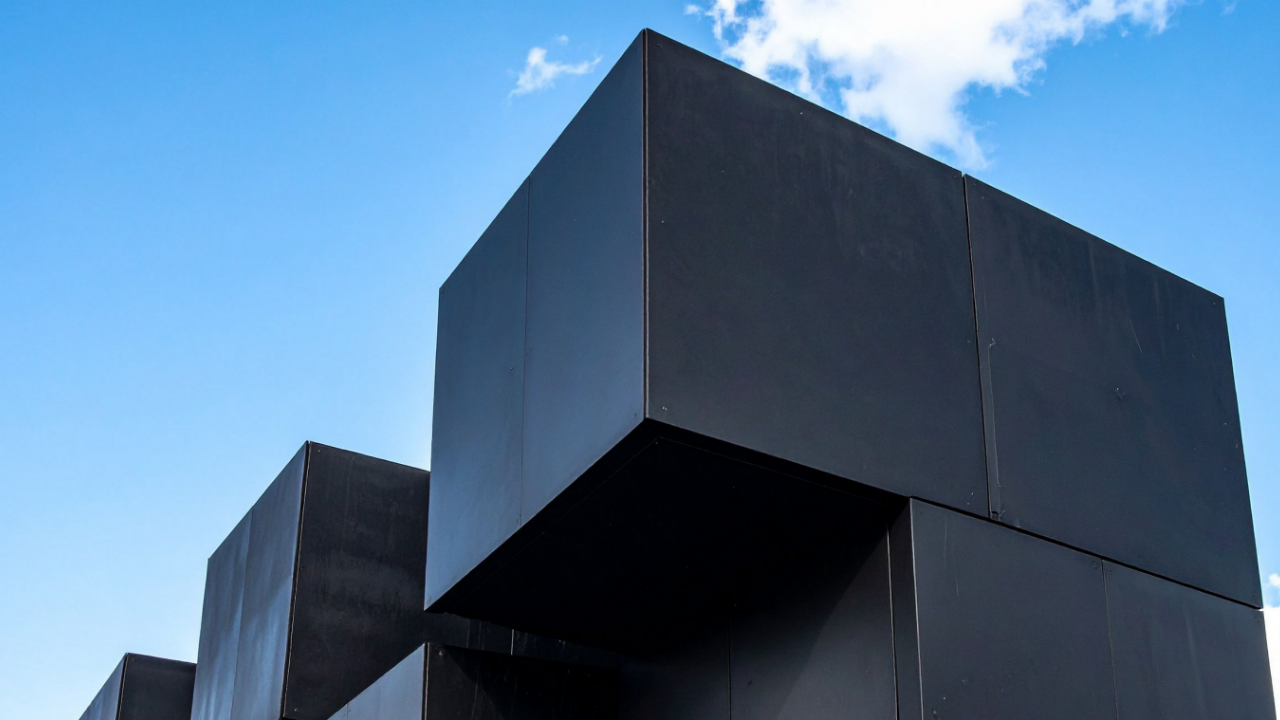
In that sense, the Cube does not always have to function in exactly the same way.
It can become a house when inhabited, a compass when moving, a map when planning, a tent when overwhelmed, and an inner room when silence is required.
The structure remains.
What you need from it changes.
Sometimes You Cannot Go All the Way Home
There is a particular kind of exhaustion that comes from realizing you are not finished yet.
You have already traveled farther than you expected. You are tired, frustrated, emotionally overloaded, or simply carrying too much information. Part of you wants the whole thing to be over, but reality is not cooperating.
There is still another conversation to have. Another day of work. Another decision. Another stretch of uncertainty.
When that happens, you may begin believing there are only two choices: keep pushing at full speed or abandon the Journey entirely.
But travelers have always needed another option.
They stop.
They establish shelter.
They recover enough capacity to continue.
The stop is not the destination, and it does not erase the distance still ahead. Its purpose is to create a temporary place of stability within the Journey itself.
That is the idea behind the tent.
The Video-Game Tent
I began thinking about this through something much less philosophical: video games.
In many games, your character travels through difficult territory for long periods of Time. You may be far from the place where the Journey began and nowhere near the final destination. Your resources are depleted. You have taken damage. The next part of the map is still waiting.
And then you reach a place where you can set up camp.
For a moment, the Journey changes.
You are still in the same world. The threats have not magically disappeared, and the objective has not changed. But within that temporary space, you can stop moving forward long enough to recover.
You check what you have. You restore what can be restored. You reorganize resources. You remember the objective. You prepare for what comes next.
Then you leave the tent.
That little mechanism has become surprisingly meaningful to me because human beings need something similar.
Sometimes you do not need to quit.
You need camp.
A Tent Does Not Pretend the Terrain Is Gone
This distinction matters.
A tent is not denial.
If there is a storm outside, putting up a tent does not mean the storm stopped existing. If the trail ahead is difficult, resting does not make the trail easier. If you are carrying grief, conflict, uncertainty, responsibility, or loss, creating a protected internal space does not make those realities disappear.
The tent changes your relationship to them temporarily.
That can be enough.
When you are overwhelmed, continuing to expose yourself to every available input may not increase your understanding. Sometimes it only increases the amount of information your internal world is trying to hold.
A protected center allows you to reduce what does not need to enter right now.
You can still acknowledge the terrain without requiring yourself to process all of it simultaneously.
That is not avoidance when the intention is to return.
It is restoration in service of continuation.
Reduce the Unnecessary Input
One of the first things you can do inside the tent is reduce input.
That may mean putting down the phone, stepping away from an argument, turning off the news, leaving a crowded room, stopping the endless search for one more piece of information, or simply becoming quiet for a few minutes.
The important word is unnecessary.
The goal is not to eliminate every difficult thing from your awareness. Some information needs to remain. Some responsibilities are real. Some Negative cannot responsibly be ignored.
But not everything deserves access to you at the same Time.
When you are already overloaded, another opinion, another notification, another imagined outcome, or another repetition of the same internal argument may contribute nothing useful to orientation.
You can close the tent flap for a while.
Reality will still be there when you open it again.
Take Inventory Before You Decide What Comes Next
Once some of the noise has quieted, you can begin taking inventory.
What do you actually know right now? What are you assuming? What has changed? What resources remain available? What has been depleted? What belongs to My Reality, and what belongs to Another's Reality? What Influence may be affecting how you are interpreting the situation?
You do not have to answer every question.
Inventory is not the same as solving.
Think again about the traveler. If you open your pack and discover that you have one day's worth of food instead of three, that information matters. You do not need to become angry at the backpack or ashamed that the supplies are low.
You need an accurate inventory.
The same is true internally.
Sometimes orientation begins when you stop demanding that reality be different long enough to notice what is actually available.
Restore What Can Be Restored
Not every depleted resource can be restored immediately.
Sometimes sleep will help. Sometimes food will help. Sometimes silence, movement, prayer, conversation, breathing, solitude, laughter, or simply Time will restore something you have temporarily lost access to.
Other things require much longer.
The important point is not that the tent contains a magical restoration system.
It gives restoration a place.
That matters because we sometimes treat depletion as evidence that we should push harder. If your ability to think clearly is deteriorating, you demand another hour of thought. If your emotional capacity is exhausted, you insist on finishing the conversation anyway. If you cannot see the route, you move faster.
The tent interrupts that sequence.
It allows you to ask whether continuing in your present condition is actually helping you navigate.
Sometimes the next faithful step is not another mile.
Sometimes it is recovering enough of yourself to take the mile responsibly.
Remember the Objective
Overwhelm can make you forget why you were traveling in the first place.
The immediate difficulty becomes so large that it replaces the larger Journey.
You may begin fighting to win an argument when the original objective was to protect a relationship. You may become obsessed with eliminating uncertainty when the actual objective was to make a responsible decision with the Knowledge available. You may spend so much energy trying not to feel a Negative that you lose sight of what the Negative was trying to tell you.
A temporary Home gives you somewhere to remember.
What are you actually trying to do?
What matters here?
What kind of person are you trying to become while doing it?
Those questions can restore orientation even when they cannot remove the difficulty.
The objective does not have to tell you the entire route.
It can remind you why you are still on the Journey.
Recalibration Is Different From Retreat
There will be moments when stopping feels like failure.
You may tell yourself that if you were stronger, wiser, more disciplined, more faithful, or more capable, you would not need the tent.
But navigation requires recalibration.
A compass is useful because it allows you to keep checking direction. A map is useful because you can compare where you intended to go with where you actually are. Neither assumes that a traveler will maintain perfect orientation without reference.
The same should be true internally.
You can discover that you have drifted without turning drift into condemnation.
Maybe you became reactive. Maybe fear took over. Maybe an Influence became so strong that you temporarily mistook it for Knowledge. Maybe you were trying to carry something that belongs to Another's Reality.
The tent gives you somewhere to notice.
Then you can recalibrate.
The purpose is not to punish yourself for losing direction.
The purpose is to recover enough direction to continue.
The Cube Can Be a House
There are times when the Cube functions more like a house than a tent.
A house suggests greater stability. You inhabit it. You know its rooms. You recognize its structure well enough that you do not have to consciously rediscover it every time you enter.
This is part of the larger aspiration of my K.I.N/G-M.A.P.
At first, you may need to deliberately ask where something belongs. You may consciously distinguish Knowledge from Influence or My Reality from Another's Reality. You may have to remind yourself to look for Positive and Negative without asking either one to describe the entire field.
Over Time, those distinctions can become increasingly familiar.
The structure begins feeling inhabited.
You know where to go when you need something.
That is when the Cube begins becoming Home.
The Cube Can Be a Compass
But Home cannot become immobility.
Life keeps moving.
There are decisions to make, relationships to navigate, unfamiliar situations to enter, and moments when the next direction is not obvious.
Then the Cube may function more like a compass.
A compass does not tell you what the entire Journey will contain. It does not remove mountains, storms, wrong turns, or fatigue.
It gives you a reference.
When you know something about direction, you can take the next step without needing the entire route to be visible.
That is often enough.
The Cube Can Be a Map
At other times, you need more than direction.
You need relationship and scale.
You need to see where one thing sits relative to another, what routes may be available, where you have already traveled, and where the terrain may require a different approach.
Then the Cube becomes a map.
A map allows you to step back from the immediate moment and examine structure. You can rotate it. Change scale. Compare locations. Notice relationships you could not see while standing inside the difficulty.
The map does not replace the terrain.
It helps you navigate it.
The Cube Can Be a Tent
And sometimes all of that is too much.
You do not need to plan the next ten miles.
You need somewhere to sit down.
This may be one of the most compassionate functions of the Cube because it recognizes that orientation requires capacity.
The tent says you are still on the Journey without demanding that you travel every moment.
You can reduce input. Take inventory. Restore. Recalibrate. Remember the objective.
Then, when enough capacity returns, you can open the flap and look outside again.
The terrain is still there.
But you are meeting it from a different condition.
The Cube Can Become an Inner Room
There are also moments when even the tent feels too exposed.
You need silence.
Not isolation from reality, but enough quiet to hear what constant input has been drowning out.
The idea of an inner room is different from escape because you eventually bring what you discover there back into relationship with the world.
You become quiet enough to notice what you actually think beneath the noise, what your body has been carrying, what you know, what you do not know, what you fear, and what may require correction.
You may discover that you do not need an answer yet.
You may need enough Ground to remain with the question.
An inner room gives silence somewhere to exist.
The Structure Remains While the Function Changes
This is what I find most interesting about these different images.
House. Compass. Map. Tent. Inner room.
They are not five separate systems.
They are different ways of relating to the same orientation structure according to what the moment requires.
When you are stable, inhabit it.
When you are moving, orient through it.
When you are planning, examine it.
When you are overwhelmed, shelter within it.
When you need silence, become still inside it.
The Cube does not have to perform one function forever in order to remain coherent.
Neither do you.
You Can Carry Home Into the Journey
Eventually, Home becomes more than the place where the Journey ends.
It becomes something you can establish along the way.
That does not mean you will always feel safe. It does not mean you will always know what to do. It does not mean you can carry enough internal structure to eliminate the need for other people, external support, Knowledge, community, or actual places of refuge.
It means you can develop a reliable way to return to orientation without requiring the entire world around you to become settled first.
That changes the Journey.
When you become overwhelmed, you do not necessarily have to abandon the route.
You can make camp.
When you lose direction, you can reach for the compass.
When the terrain becomes confusing, you can look at the map.
When you need stability, you can return to the house.
When the noise becomes too great, you can enter the inner room.
And then, when you are ready, you continue.
Perhaps that is one of the deepest meanings of Home within my K.I.N/G-M.A.P.
Home is not only somewhere you eventually arrive. It is an orientation you can increasingly learn to carry with you.

Continue the Journey
If you've ever felt overwhelmed by competing thoughts, responsibilities, emotions, or decisions, you're not alone.
Cube Philosophy offers practical ways to organize your internal world, find your bearings, and navigate life's complexity with greater clarity, stability, and purpose.
Continue exploring practical ideas that help you find your bearings, organize life's complexity, and participate more consciously in your own development.
