The Body Is Part of How We Understand Reality
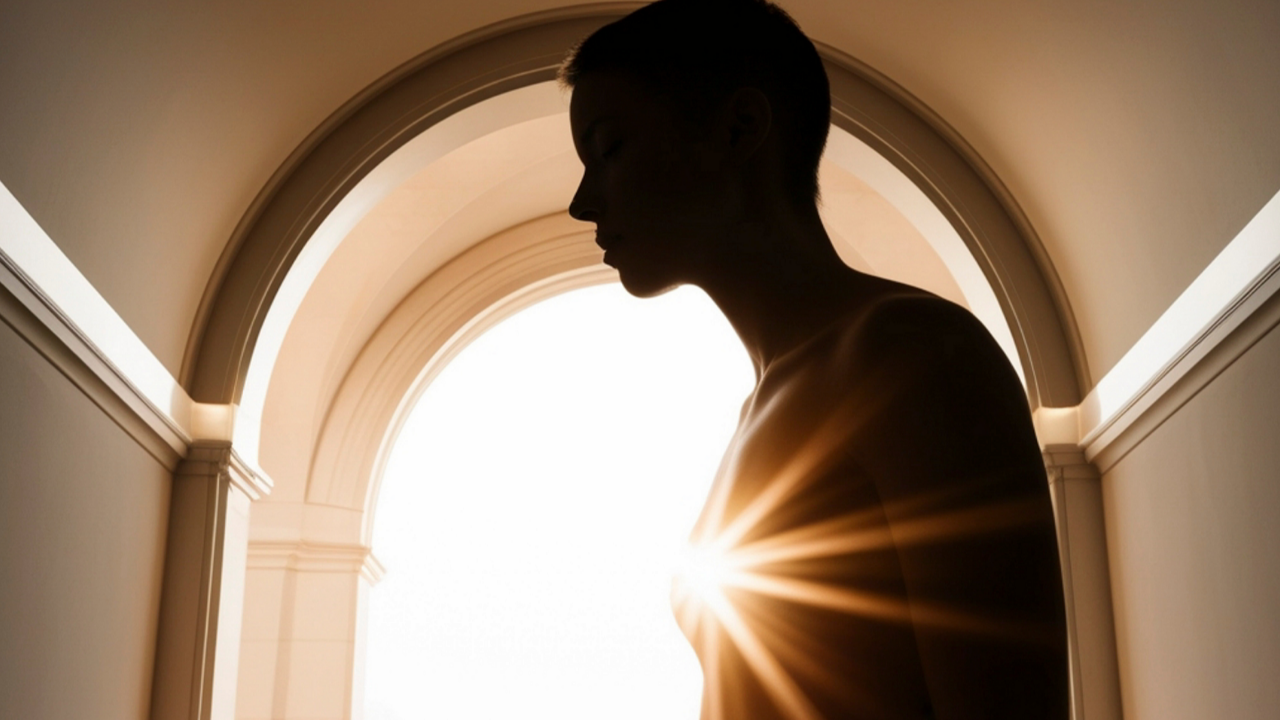
We often talk about understanding as though it happens entirely in the mind.
We think. We reason. We remember. We interpret. We decide what something means.
But none of those things happen apart from the body.
Every experience you have arrives through a living system. You see through eyes. You hear through ears. You feel tension in muscles, changes in breathing, hunger, fatigue, warmth, pain, comfort, threat, and ease. Your nervous system is responding to what is happening around you before you have necessarily found words for it.
This does not mean the body always tells us what is true.
It means the body is always part of how we encounter what is true.
That distinction matters.
Cube Philosophy begins with orientation because we never stand outside reality and observe it from a perfectly neutral position. We are already inside it. We bring a body, a history, a language, memories, relationships, experiences, assumptions, and patterns of response with us.
Understanding ourselves therefore requires more than asking, What do I think?
Sometimes we also need to ask:
What is happening in me while I think it?
We Experience Reality Through a Body
Imagine two people walking into the same room.
The room itself may be the same. The temperature is the same. The furniture is the same. The people present are the same.
But the experience of that room may be completely different.
One person relaxes.
The other becomes tense.
One notices an opportunity.
The other notices a threat.
One feels welcomed.
The other immediately begins looking for a way to leave.
Neither response appeared from nowhere. Each person entered carrying an existing internal world.
In Cube Philosophy, Jacob describes perception as being mediated through a body, nervous system, history, culture, language, and memory. That is part of why two sincere people can encounter the same event and experience it very differently.
Recognizing this does not require us to conclude that reality is merely subjective.
Quite the opposite.
It reminds us that our experience of reality and reality itself are not necessarily identical.
That is where orientation begins.
Your Body Is Already Participating
Your body does not wait for you to finish thinking before it participates in an experience.
A conversation becomes tense and your shoulders tighten.
Someone says something unexpected and your stomach drops.
You enter a familiar place and suddenly feel at ease.
You become overwhelmed and your breathing changes.
You are exhausted, and a problem that seemed manageable yesterday suddenly feels enormous.
These experiences matter because Influence is already operating whether or not we consciously recognize it.
The body is one of those influences.
Fatigue influences perception. Hunger influences perception. Physical pain influences perception. Posture, environment, memory, language, other people, and countless other conditions are already acting upon us before we consciously identify what is happening. Jacob's framework treats Influence as structurally unavoidable even though individual influences continually change.
The question, then, is not whether your body is participating.
It already is.
The question is whether you are aware enough to notice what it is contributing.
Sensation Gives Us Information
This is where an important distinction within Cube Philosophy becomes necessary:
Sensation is informative. It is not authoritative.
A sensation can tell you that something is happening.
It cannot always tell you exactly what that something means.
Feeling afraid does not automatically prove that you are in danger.
Feeling comfortable does not automatically prove that something is good for you.
Feeling angry does not automatically establish who is right.
Feeling strongly about an interpretation does not transform that interpretation into reality.
But ignoring those sensations would also remove information from the field.
In embodied mode, reality can arrive as tension or ease, safety or threat, fatigue or vitality, regulation or overwhelm. These bodily experiences become part of what must be noticed and differentiated rather than automatically obeyed or dismissed.
The goal is not to let sensation rule.
The goal is to let sensation inform.
The Body Can Reveal What the Mind Has Not Yet Named
Sometimes we have an explanation for what is happening before we feel its physical effects.
Sometimes the order is reversed.
The body notices first.
You may say that everything is fine while realizing you have been bracing your shoulders for an hour.
You may believe you have moved past an experience while noticing how quickly your breathing changes when the subject returns.
You may think a decision is simple while your entire system seems to be signaling that something deserves another look.
Again, the physical response does not get the final word.
But it deserves a place in the conversation.
Jacob describes one of the early benefits of greater orientation in distinctly physical terms. As experiences gained location and meaning gained placement, his nervous system gradually stopped carrying the same constant background urgency. The body registered the difference before the intellect fully did.
That is an important clue.
Sometimes understanding is not simply an idea becoming clearer.
Sometimes it is pressure leaving the system.
Embodiment Is Different From Thinking About the Body
There is another distinction worth making.
Thinking about your body is still thinking.
Embodiment is different.
In Cube Philosophy's embodied mode, the framework is no longer something you simply stand outside and examine. My Reality, Another's Reality, Knowledge, Influence, Positive, and Negative are operating together in lived experience—in the body, in real time.
That is why embodiment matters so much to the larger framework.
A philosophy can sound coherent on paper.
A map can look impressive from above.
A structure can make perfect intellectual sense.
But eventually you have to live inside it.
Can it help you orient when you are tired?
Can it help you recognize what is happening when you are overwhelmed?
Can it remain available during disagreement?
Can you distinguish your reality from another person's reality when emotions are high?
Can you recognize a limit without interpreting that limit as failure?
Can you return after losing your way?
Those questions cannot be answered only on a board.
They are answered in lived reality.
The Body Is Not an Obstacle to Wisdom
It can be tempting to imagine wisdom as overcoming the body.
Think more clearly.
Control the emotion.
Ignore the discomfort.
Push through the fatigue.
Get the reaction under control.
But Cube Philosophy offers another possibility.
What if the body is not something that must be defeated before clear orientation becomes possible?
What if it is part of the field that needs to be understood?
A limit may be inconvenient and still be real.
Fatigue may not dictate what you should do, but it may change what you currently have the capacity to do.
An emotional response may not determine truth, but it may reveal something that needs to be examined.
Physical tension may not explain a situation, but noticing it may help you recognize that something in the situation has activated you.
Orientation allows us to hold both truths at once:
The body matters.
The body does not get to define reality by itself.
That is not a contradiction.
It is differentiation.
From Awareness to Orientation
This is where Body connects naturally to the larger journey of Cube Philosophy.
The goal is not simply to become more aware of physical sensations.
Awareness is the beginning.
Orientation asks what those sensations mean, where they belong, what is influencing them, what evidence exists, what reality requires, and what response is appropriate.
Sometimes the body needs rest.
Sometimes it needs movement.
Sometimes it needs food.
Sometimes it needs distance.
Sometimes it needs connection.
Sometimes the discomfort needs to be tolerated because something difficult but necessary is happening.
Sometimes what feels like danger is an old response being activated in a new situation.
And sometimes the body is correctly telling us that a limit has been reached.
We cannot know which merely by noticing that we feel something.
We have to orient.
Learning to Inhabit the Map
There is a progression running through Cube Philosophy and Living Cube Philosophy.
At first, we may need to consciously think about the distinctions.
We learn the map.
We identify where things belong.
We notice patterns.
We practice returning.
But eventually something begins to change.
The structure becomes less like information we are trying to remember and more like something we know how to inhabit.
Jacob compares this to learning to ride a bicycle. At first, every movement requires attention. With repetition, correction becomes increasingly natural. The body learns what the mind once had to manage consciously.
That does not mean consciousness disappears.
It means practiced orientation can become increasingly available when we need it.
The map begins to move inside us.
A Home You Can Carry With You
Perhaps this is one of the deepest reasons the body belongs in a philosophy of orientation.
We cannot always control where we are.
We cannot guarantee that life will remain calm.
We cannot eliminate disorientation, loss, uncertainty, conflict, fatigue, or change.
But we can develop ways of returning.
Eventually, home does not have to mean a place where nothing difficult happens.
It can mean having a stable place from which difficulty can be encountered.
The body becomes part of that return.
Breath.
Awareness.
Observation.
Orientation.
The ability to notice when we are bracing.
The ability to recognize when something has shifted.
The ability to stop treating every sensation as truth while also refusing to pretend the sensation is meaningless.
The Cube becomes more than something we look at.
It becomes something we learn to live from.
And perhaps that is one of the first steps toward becoming at home within ourselves:
not escaping the body, not being ruled by the body, but learning to inhabit it consciously while facing reality as clearly as we can.

Continue the Journey
If you've ever felt overwhelmed by competing thoughts, responsibilities, emotions, or decisions, you're not alone.
Cube Philosophy offers practical ways to organize your internal world, find your bearings, and navigate life's complexity with greater clarity, stability, and purpose.
Continue exploring practical ideas that help you find your bearings, organize life's complexity, and participate more consciously in your own development.
