The Problem Isn't Information, It's Orientation
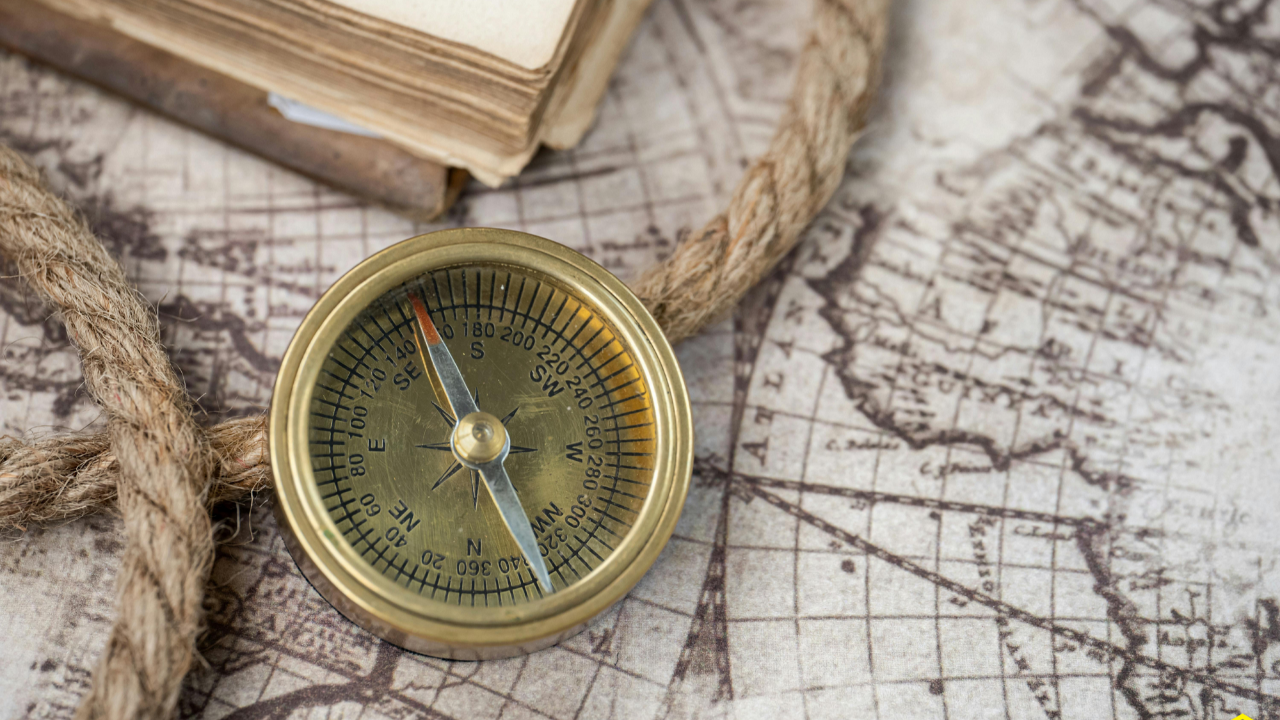
We live in a world overflowing with information.
Books.
Podcasts.
Videos.
Articles.
Courses.
Experts.
Opinions.
Never before in human history have we had access to so much knowledge.
And yet many people feel more confused than ever.
Why?
If information alone solved problems, we should be the most confident, clear-thinking generation in history.
Instead, many people feel overwhelmed.
They struggle to make decisions.
They second-guess themselves.
They consume more and more information while feeling less and less certain about what to do next.
The problem isn't information.
The problem is orientation.
More Information Doesn't Always Create More Clarity
When we feel uncertain, our natural instinct is often to gather more information.
We read another article.
Watch another video.
Listen to another expert.
Ask another friend.
Search for another answer.
Sometimes this helps.
But often it creates a different problem.
Every new source introduces a new perspective.
Every perspective introduces new possibilities.
And every possibility introduces more complexity.
Eventually we become trapped in an endless cycle of collecting information without knowing how to organize it.
What began as a search for clarity becomes a source of confusion.
Knowledge Tells Us What Exists.
Orientation Helps Us Understand Where We Stand.
Imagine being dropped into the middle of a vast library.
Thousands of books surround you.
Every shelf contains useful information.
Every book contains knowledge.
But before any of that knowledge can help you, you need to know one thing:
Where are you?
Without orientation, even useful information becomes difficult to use.
The same thing happens in life.
We can learn about relationships, careers, personal growth, philosophy, psychology, faith, leadership, and decision-making.
But if we don't understand where we stand in relation to those ideas, knowledge alone cannot guide us.
Information tells us what exists.
Orientation helps us understand where we are.
And knowing where we are is often the first step toward knowing where to go.
Why Intelligent People Often Struggle
This is one reason highly intelligent people sometimes feel lost.
They see more possibilities.
More perspectives.
More explanations.
More variables.
They are capable of understanding competing viewpoints.
They can see strengths and weaknesses on multiple sides of an issue.
This ability is valuable.
But without orientation, it can become overwhelming.
Every answer creates another question.
Every solution reveals another possibility.
Every decision feels incomplete.
What appears to be a lack of certainty is often a lack of orientation.
The issue is not intelligence.
The issue is that intelligence alone does not tell us where we stand.
Orientation Begins With Differentiation
Before we can orient ourselves, we often need to make distinctions.
Simple distinctions.
Meaningful distinctions.
Useful distinctions.
Your reality is not someone else's reality.
A fear is not necessarily a fact.
A difficult experience is not your entire identity.
A feeling is real, but it is not the whole story.
These distinctions may seem small.
But small distinctions create space.
And space allows us to think more clearly.
Once we can separate one thing from another, orientation becomes possible.
And once orientation becomes possible, navigation can begin.
And once we can navigate more intentionally, meaningful development becomes possible.
Orientation comes before navigation.
Navigation comes before development.
Finding Your Bearings
A traveler lost in the wilderness does not need to memorize every trail.
They first need to find their bearings.
Where am I?
What direction am I facing?
What landmarks can I trust?
Only then does movement become meaningful.
Life works much the same way.
The goal is not to know everything.
The goal is not to eliminate uncertainty.
The goal is not certainty.
The goal is orientation.
When we understand where we stand, decisions become easier.
Relationships become clearer.
Complexity becomes more manageable.
And the next step becomes easier to see.
Not because life becomes simple.
But because we no longer become lost inside it.
Continue the Journey
Cube Philosophy is not about collecting more ideas.
It is about learning to organize experience so you can participate more consciously in your own development.
Information helps us understand what exists.
Orientation helps us understand where we stand.
From there, we can begin to navigate life with greater clarity, stability, and purpose.
Because information alone is not enough.
First, we need orientation.

Continue the Journey
If you've ever felt overwhelmed by competing thoughts, responsibilities, emotions, or decisions, you're not alone.
Cube Philosophy offers practical ways to organize your internal world, find your bearings, and navigate life's complexity with greater clarity, stability, and purpose.
Continue exploring practical ideas that help you find your bearings, organize life's complexity, and participate more consciously in your own development.
