There Is a Way Out, and It Is Through
Sooner or later, you reach a moment when whatever you have been carrying becomes too much.
Your thoughts begin circling the same problem. Emotion rises faster than you can organize it. Something that seemed manageable an hour ago suddenly feels enormous. You lose perspective, and the more urgently you try to find it, the harder it becomes to see.
Sometimes the words are I don't know what to do.
Sometimes they are I'm done.
Sometimes they are Forget it.
And sometimes the language is considerably less polite.
For a long time, moments like these can feel like evidence that something has gone wrong. You were doing fine, and now you are not. You understood what you were trying to practice, and suddenly you cannot access it. You thought you had Ground, and now Ground seems to have disappeared.
But what if the moment you recognize that you are disoriented is not simply the problem?
What if it is also the beginning of the way through?
There is a way out, and it is through.
Not around reality. Not by pretending you are unaffected. Not by forcing yourself to feel differently before you are allowed to continue.
Through.
Disorientation Is Something You Can Notice
There is an important difference between being disoriented and recognizing that you are disoriented.
The first is an experience.
The second is awareness.
That difference may seem small, but it changes what becomes possible. When you are completely inside the reaction, the reaction can feel like reality itself. Fear does not feel like something you are experiencing; everything simply looks dangerous. Anger does not feel like one part of the field; everything begins organizing around what has offended or threatened you. Uncertainty does not feel like missing information; it can feel as though nothing is stable at all.
Then something happens.
You notice.
I'm looping.
I'm overwhelmed.
I'm losing perspective.
That recognition does not immediately solve the problem. The emotion may still be present. The situation may still be difficult. Nothing outside you may have changed.
But you have changed your relationship to what is happening.
You are no longer only inside the disorientation.
You can see that you are disoriented.
And that is a doorway.
The First Cue May Be the Moment You Lose Your Way
We usually think of cues as things that tell us when to begin. Actors wait for cues. Musicians follow cues. Athletes respond to cues. Drivers recognize cues that tell them when to stop, turn, slow down, or move.
Your internal world contains cues too.
The difficulty is that many of them operate without your awareness. Stress becomes a cue to panic. Conflict becomes a cue to defend. Loneliness becomes a cue to withdraw. Criticism becomes a cue to attack yourself. Uncertainty becomes a cue to force an answer.
The cue itself is not necessarily the problem.
The sequence that automatically follows it may be.
This is where practice can begin changing something important. The same feeling that once automatically launched an old pattern can gradually become the signal that reminds you to orient.
I'm overwhelmed.
Instead of that sentence meaning everything is falling apart, it can begin to mean:
This is my cue.
Not the cue to solve your entire life.
The cue to begin.
A Cue Is Not the Method
This distinction matters enough to say clearly:
A cue is not the method. A cue is what reminds you to begin the method.
Recognizing that you are overwhelmed does not orient you by itself. Taking one breath does not resolve the relationship. Remembering the Cube does not make the Negative disappear. Finding Ground does not guarantee that the decision ahead will become easy.
The cue simply interrupts the automatic sequence long enough for another sequence to become available.
That is what makes simple cues so powerful.
Under pressure, you usually do not need another hundred pieces of information. You need access to something you already know but temporarily cannot retrieve.
You need the reminder that says:
Begin here.
Over time, those reminders can become landmarks. Landmarks become familiar pathways. Familiar pathways become practices. Practices repeated under real conditions begin changing what you can access when life applies pressure.
What once required deliberate effort can become increasingly available.
Not because the terrain became easier.
Because you learned where to begin when you lost your way.
Remember to Just Be
There is a piece of wordplay that became meaningful to me precisely because it is simple.
When everything starts accelerating, remember to just Be.
Do not solve the entire problem yet. Do not decide what everything means. Do not force an answer out of a nervous system that is already overwhelmed.
Just Be.
Take a breath.
Then take the B and put it in the Cue.
You have the Cube.
It is almost ridiculously simple.
That is part of why it works.
The mind does not always retrieve complicated philosophy well under pressure. But it can remember a cue. It can remember a word, an image, a breath, or a small sequence that says, You have somewhere to return.
The Cube does not solve the problem for you.
It reminds you how to begin orienting inside it.
Through Does Not Mean Force
The word through can easily be misunderstood.
It does not mean you must push through every obstacle. It does not mean enduring indefinitely, ignoring exhaustion, tolerating harm, or proving your strength by refusing to stop.
Sometimes the most oriented response to the terrain is to stop.
Sometimes it is to leave.
Sometimes it is to rest, ask for help, change direction, recognize a boundary, or accept that a road is no longer available.
Through does not describe a particular outcome.
It describes your relationship with reality.
You do not regain orientation by denying what is there.
If there is grief, you orient through the presence of grief. If there is uncertainty, you begin from what is actually unknown. If Another's Reality contains a no, you do not regain orientation by turning that no into the yes you wanted. If your body has reached a limit, you do not find Ground by pretending the limit does not exist.
You move through what reality reveals because reality is the terrain in which orientation has to occur.
You Cannot Return by Leaving Reality Behind
When something hurts, the temptation to move around it can be powerful.
You may explain it away. Minimize it. Intellectualize it. Blame yourself for feeling it. Blame someone else for causing it. Rush toward Positive because Negative feels intolerable. Reach for certainty because uncertainty feels unsafe.
All of those movements can feel like progress because they create motion.
But motion and orientation are not the same thing.
You can move very quickly in the wrong direction.
The way through begins by allowing what is present to have a place. My Reality can contain pain without pain becoming the whole of reality. Another's Reality can contain something you dislike without your disagreement erasing their position. Negative can reveal a real constraint without becoming a declaration that everything is hopeless.
Knowledge can contain I don't know.
Influence can help you recognize why this particular terrain feels so difficult.
Time can remain open long enough for reality to reveal something you cannot yet see.
And Ground can give those distinctions somewhere to coexist without requiring immediate resolution.
That is through.
Ground Is Not the Absence of Difficulty
It is easy to imagine Ground as a feeling of calm.
Sometimes it feels that way.
But Ground cannot depend on everything around you becoming comfortable, because then Ground would disappear precisely when you needed it most.
Ground is not the promise that emotion will stop. It is not the absence of uncertainty, conflict, grief, or Negative. It is not a state in which you finally understand everything.
Ground gives you somewhere to stand while those things remain present.
That changes what you are asking of yourself.
Instead of How do I make this feeling disappear?, you can ask, Can I remain oriented while this feeling is here?
Instead of How do I make this person understand me?, you can ask, Can My Reality and Another's Reality remain distinguishable even if we disagree?
Instead of How do I know exactly what happens next?, you can ask, What do I actually know now, and what remains unknown?
Ground does not require the storm to end before you can find your footing.
Sometimes finding your footing is how you begin moving through the storm.
Through Requires Distinction
When you are overwhelmed, everything has a tendency to collapse together.
A feeling becomes a fact. A fear becomes a prediction. Someone else's behavior becomes a statement about your worth. One difficult moment becomes evidence about your entire life. A limit becomes failure. Uncertainty becomes danger.
The Cube helps slow that collapse.
What belongs to My Reality?
What belongs to Another's Reality?
What do I actually know?
What is influencing how I am interpreting this?
Where is Positive?
Where is Negative?
What has Time revealed?
Where is Ground?
You do not ask these questions because every experience needs to become an intellectual exercise.
You ask because distinction creates room.
And sometimes room is exactly what disappears when you become overwhelmed.
Once everything is no longer occupying the same internal space, the situation becomes more workable. It may not become easier. It may still hurt.
But pain with placement is different from pain that has become the whole world.
You May Discover That the Way Through Includes Correction
Sometimes orientation brings you back to the path you were already on.
Sometimes it does not.
You may move through the confusion and discover that something you believed was wrong. You may recognize that you misread another person, ignored a limit, underestimated an Influence, or kept defending a direction after reality had begun telling you something different.
That can be uncomfortable because we often want orientation to confirm us.
But a framework that can only tell you that you were already right is not giving you orientation.
It is giving you reinforcement.
Reality has to be allowed to correct the map.
That means the way through sometimes includes saying, I was wrong.
Sometimes it includes I don't know.
Sometimes it includes I can't carry this.
Sometimes it includes This isn't mine.
Sometimes it includes I need help.
And sometimes it includes the recognition that the direction you were trying so hard to recover is no longer the direction you should be traveling.
Correction is not necessarily evidence that orientation failed.
Correction is part of orientation.
Through Is Different From Around
Going around something can be useful when the terrain actually calls for another route.
Avoidance is different.
Avoidance does not change the route because new Knowledge has appeared. It changes the route so you do not have to encounter what the Knowledge means.
That distinction can be subtle.
You can leave a conversation because the conversation is no longer productive, or you can leave because you cannot tolerate hearing Another's Reality.
You can change a goal because Time has revealed that the goal no longer fits, or you can abandon it because the discomfort of development feels like evidence that you are incapable.
You can rest because your body has reached capacity, or you can use rest to avoid returning to something you know still belongs to you.
The outward behavior may look similar.
Orientation asks what is actually happening underneath it.
Going through does not mean choosing the hardest path.
It means choosing in relationship with reality rather than organizing your life around escaping contact with it.
What You Practice Becomes Easier to Retrieve
There is a reason repetition matters.
You do not want the first time you try to find Ground to be the moment your entire internal world is under maximum load.
You practice orientation in smaller moments.
You notice when irritation begins rising in an ordinary conversation. You catch yourself turning an assumption into Knowledge. You recognize when you are trying to manage Another's Reality. You notice the body's cue that says your capacity is changing.
Then you return.
Again.
And again.
Over time, something that once required a long internal conversation can become a recognizable pathway.
Cue.
Pause.
Breathe.
Orient.
Return.
The point is not to perform the sequence perfectly. The point is to make the path increasingly familiar.
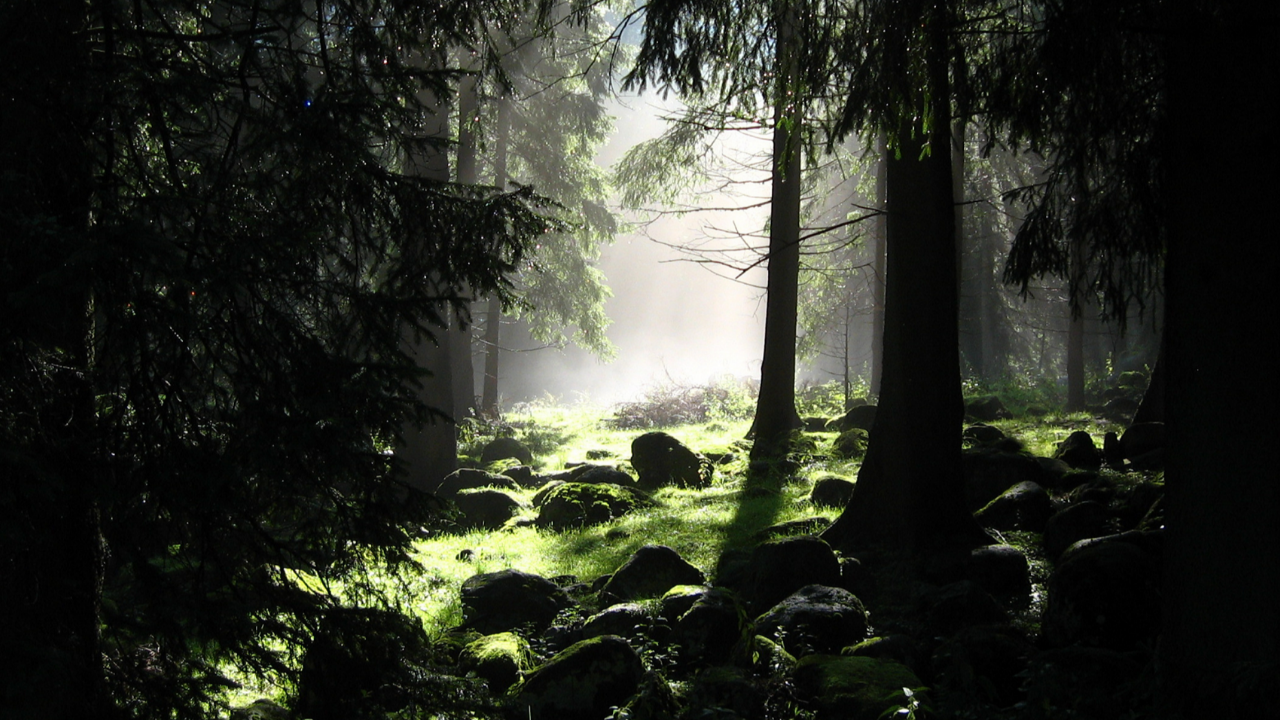
Because when the forest gets dark, familiar paths matter.
Through Becomes the Way Back In
When you become disoriented, the instinct may be to find a way out of the experience as quickly as possible.
But sometimes the real movement is not out.
It is back in.
Back into relationship with your body instead of fighting what it is telling you. Back into relationship with Knowledge instead of demanding certainty. Back into relationship with Another's Reality without surrendering your own. Back into relationship with Negative without allowing it to erase Positive.
Back into Time.
Back into Ground.
Back into reality.
This is what I mean when I say:
Through becomes the way back in.
You move through the honest recognition of what is happening until you can participate in what is happening again.
Not perfectly.
Not without emotion.
Not without uncertainty.
But with enough orientation to choose.
The Way Home Is Built Through Returning
You will lose orientation again.
That is not pessimism. It is part of being human.
You will have days when you know the language and cannot retrieve it. You will react before you orient. You will confuse fear with Knowledge, carry something that belongs to Another's Reality, ignore Negative, or lose Ground.
The goal cannot be to construct a life in which that never happens.
The more useful goal is to become increasingly capable of recognizing when it has happened and knowing how to return.
That is where my K.I.N/G-M.A.P. becomes more than a collection of words or ideas. The words have to live long enough to become retrievable. They have to meet real terrain, real relationships, real mistakes, real consequences, and real Time.
Eventually, some of them become landmarks.
Some become cues.
Some become paths you have walked enough times that your feet begin to recognize them.
And each return teaches you something about the way Home.
Begin Where You Notice You Are
Maybe you are reading this from a place of clarity.
Maybe you are not.
Maybe something in your life feels unresolved. Maybe you have been looping around the same question, trying to think your way out of something that cannot yet be solved. Maybe you know you are disoriented but cannot see the whole path back.
You do not need the whole path.
Begin with the fact that you noticed.
That recognition matters.
You are here.
Take one breath.
Let what is yours be yours. Let what belongs to another person remain theirs. Allow what you know to be Knowledge and what you do not know to remain unknown. Notice Influence. Allow Positive and Negative to occupy their own places.
Find whatever Ground is available now.
Then see what becomes possible from there.
The moment of disorientation does not have to be the end of the sequence.
It can become the cue that begins another one.
There is a way out, and it is through.
And sometimes, when you move honestly enough through what is actually there, you discover that what you were looking for was not an escape from reality.
It was a way back into relationship with it.
Through becomes the way back in.

Continue the Journey
If you've ever felt overwhelmed by competing thoughts, responsibilities, emotions, or decisions, you're not alone.
Cube Philosophy offers practical ways to organize your internal world, find your bearings, and navigate life's complexity with greater clarity, stability, and purpose.
Continue exploring practical ideas that help you find your bearings, organize life's complexity, and participate more consciously in your own development.
